![[object Object]](https://img-va.myshopline.com/image/store/2000678933/1663746048441/39b6b7c932914f9586953fa6dbb3e95c.png?w=1694&h=200)
Sewing Lace to Stretch Fabrics: 5 Secrets for a Flawless, Ripple-Free Finish
Jul 09,2026 | LaceFabricShop
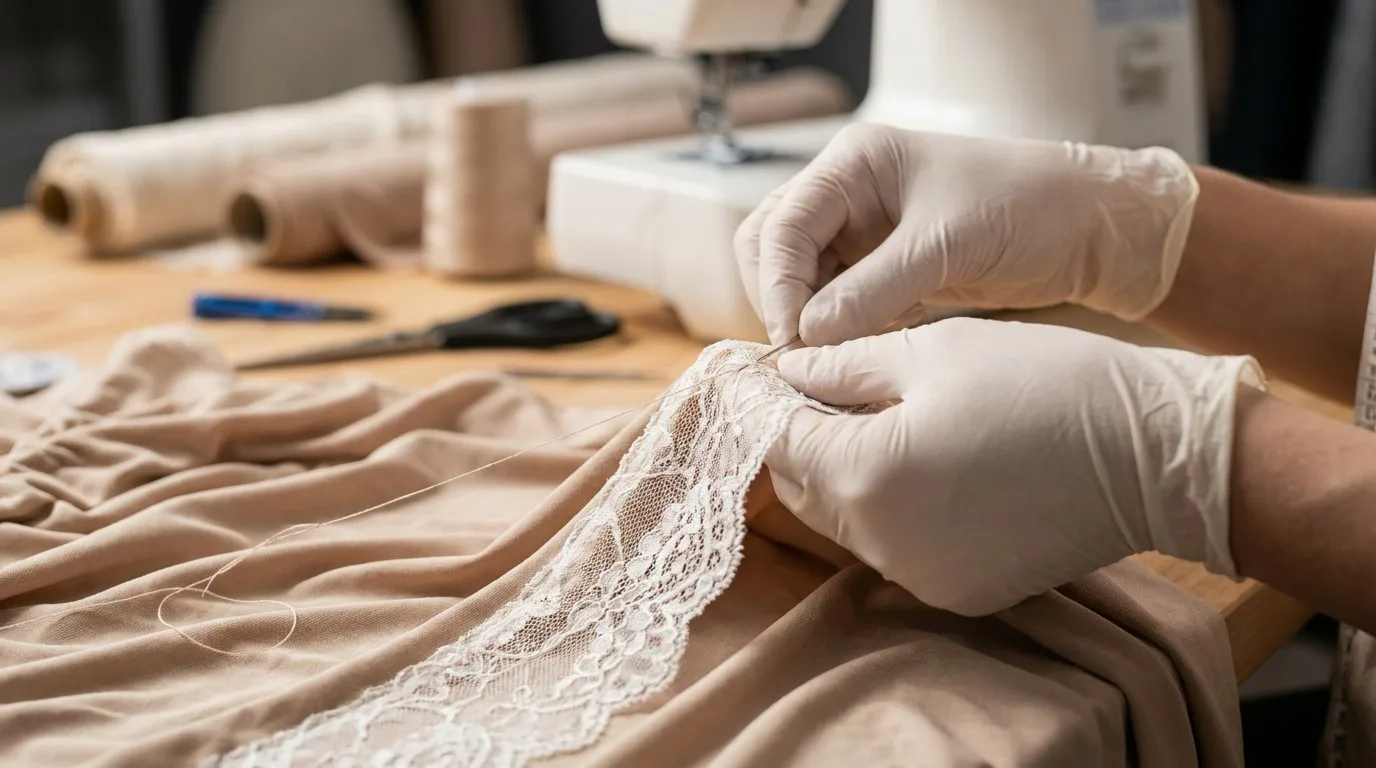
Combining the elegance of lace with the comfort of stretch fabrics is the hallmark of premium lingerie and high-performance fashion. However, for many designers, this combination often results in dreaded ripples, broken threads, or puckered seams. To help you master this high-stakes technique, we’ve compiled the 5 essential secrets for sewing lace to knits and stretch materials.
At LaceFabricShop, our expansive library of 1185+ styles includes specialized stretch laces designed for comfort and durability. Here is how you ensure they look professional on your next design.
1. Choose the Ballpoint Needle
Standard sharp needles are designed to pierce woven threads, but they can cut the delicate fibers of stretch fabrics, leading to small holes or "runs." Always switch to a ballpoint or stretch needle (size 75/11 or 80/12). The rounded tip pushes the fibers aside instead of cutting them, preserving the integrity of both your lace and your base fabric.
2. The Narrow Zigzag: Your Best Friend
The biggest mistake in stretch sewing is using a straight stitch. Straight stitches have zero "give" and will snap as soon as the garment is worn. Instead, use a narrow zigzag stitch (length: 1.5, width: 0.5). It looks almost like a straight line but allows the seam to expand and contract with the body’s movement.
3. Manage Tension with Tissue Paper
Lace often gets "eaten" by the feed dogs when sewn to thin knits. A simple couture hack: place a strip of tissue paper or water-soluble stabilizer between the fabric and the presser foot. This prevents the fabric from stretching out under the foot and ensures the feed dogs grip the layers evenly. Simply tear it away once the seam is complete.
4. Aligning the Stretch Direction
Most laces have a "directional stretch." Before cutting, ensure the greatest amount of stretch in the lace aligns with the greatest stretch of your base fabric (usually around the body). If your lace is stable but your fabric is stretchy, you must handle the assembly carefully to avoid "bubbling" where the two materials meet.
5. Edge-Finishing with Stretch Trim
For a truly professional look, finish your lace-to-knit joins with a soft elastic or a specialized stretch trim. This not only reinforces the seam but also provides a clean, comfortable edge that won't irritate the skin—crucial for intimate apparel and bridal linings.
🧵 Elevate Your Lingerie & Bridal Designs
Discover our range of stretch laces and premium trims perfect for your next masterpiece.
Comment