![[object Object]](https://img-va.myshopline.com/image/store/2000678933/1663746048441/39b6b7c932914f9586953fa6dbb3e95c.png?w=1694&h=200)
5 Professional Tips for Sewing Delicate Lace Without Fraying or Puckering
Jun 28,2026 | LaceFabricShop
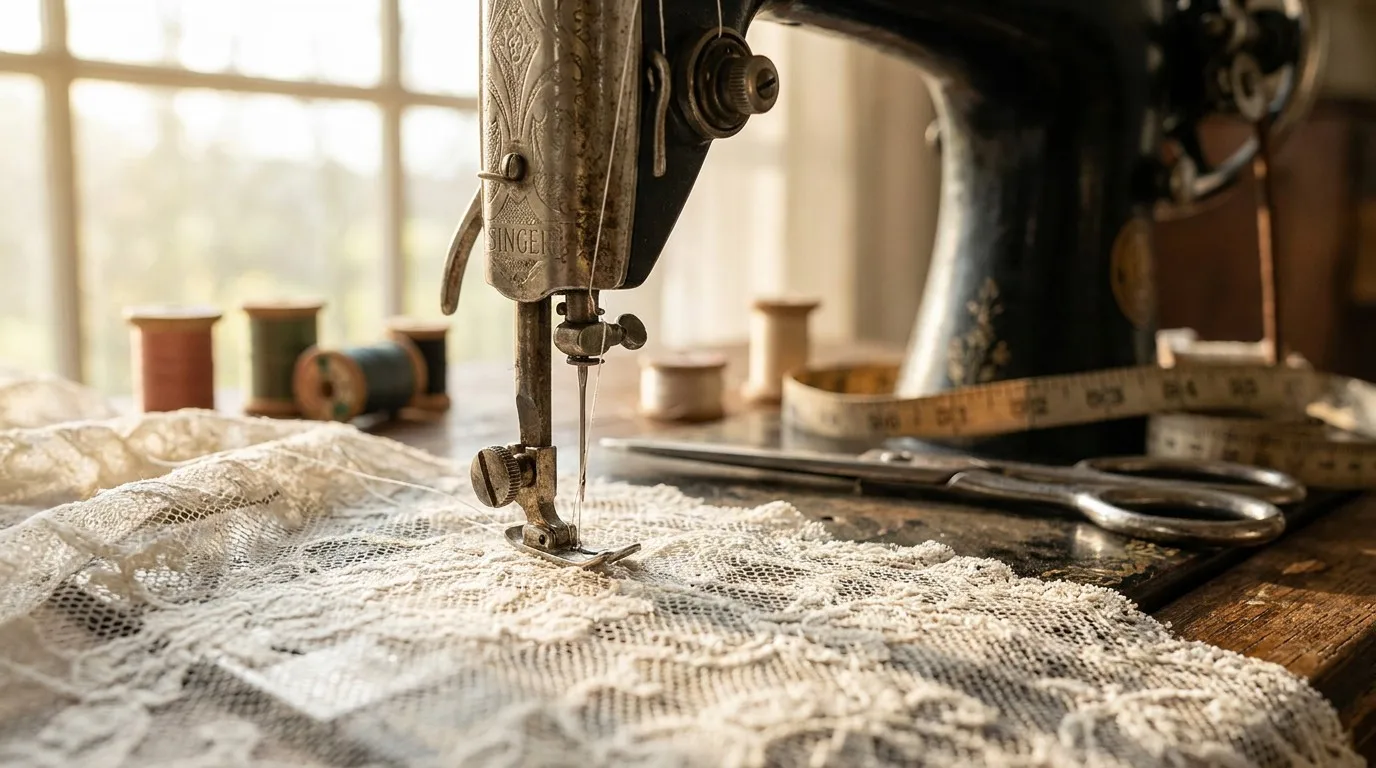
Working with high-end lace is a dream for many designers, but it can quickly turn into a technical nightmare if you aren't prepared for its delicate nature. Whether you are crafting a bespoke bridal gown or a premium ready-to-wear piece, handling lace requires precision and the right set of professional techniques.
At LaceFabricShop, where we offer over 1185+ styles of premium lace, we want to ensure your final creation looks as luxurious as the raw material. Here are 5 expert tips to elevate your lace sewing game.
1. Use the Right Needle and Thread
Delicate lace calls for a fine touch. Always use a size 60/8 or 70/10 Microtex or Sharp needle. These needles have a slimmer point that pierces fine threads without pulling or damaging the intricate patterns. Pair this with a high-quality 100% polyester thread for strength and a smooth finish.
2. The Magic of Wash-Away Stabilizer
Puckering is the enemy of professional finish. When sewing seams on lightweight lace or tulle, place a strip of wash-away stabilizer underneath. This gives the fabric enough "body" for the feed dogs to move smoothly without eating the fabric. Once finished, just rinse it away with water.
3. Master the French Seam
Exposed raw edges are a sign of amateur work. For lace, the French Seam is the gold standard. It encases the raw edges completely, providing a clean, couture-level finish on the inside of the garment. Since lace is often transparent, this technique keeps your construction invisible.
4. Stay-Stitching is Non-Negotiable
Lace has a tendency to stretch and distort, especially around necklines and armholes. Before you begin major assembly, perform stay-stitching within the seam allowance. This small step locks the fabric's shape and prevents the lace from "growing" as you handle it.
5. Hand-Appliqué for Seamless Joins
Sometimes, a machine seam just won't cut it. For a truly invisible join—especially in 3D floral or heavy motif lace—try hand-appliqué. Cut around the motifs of one edge and overlap them onto the second piece, then hand-stitch following the pattern. This creates a continuous, seamless look that machines simply cannot replicate.
🧵 Ready to Put These Tips to the Test?
Explore our vast collection of designer-grade lace and find the perfect match for your next project.
Comment