![[object Object]](https://img-va.myshopline.com/image/store/2000678933/1663746048441/39b6b7c932914f9586953fa6dbb3e95c.png?w=1694&h=200)
How to Match Lace Trim With Different Fabrics: A Practical Guide for Dressmakers
Sep 26,2026 | LaceFabricShop
Introduction: Match the Trim to the Fabric
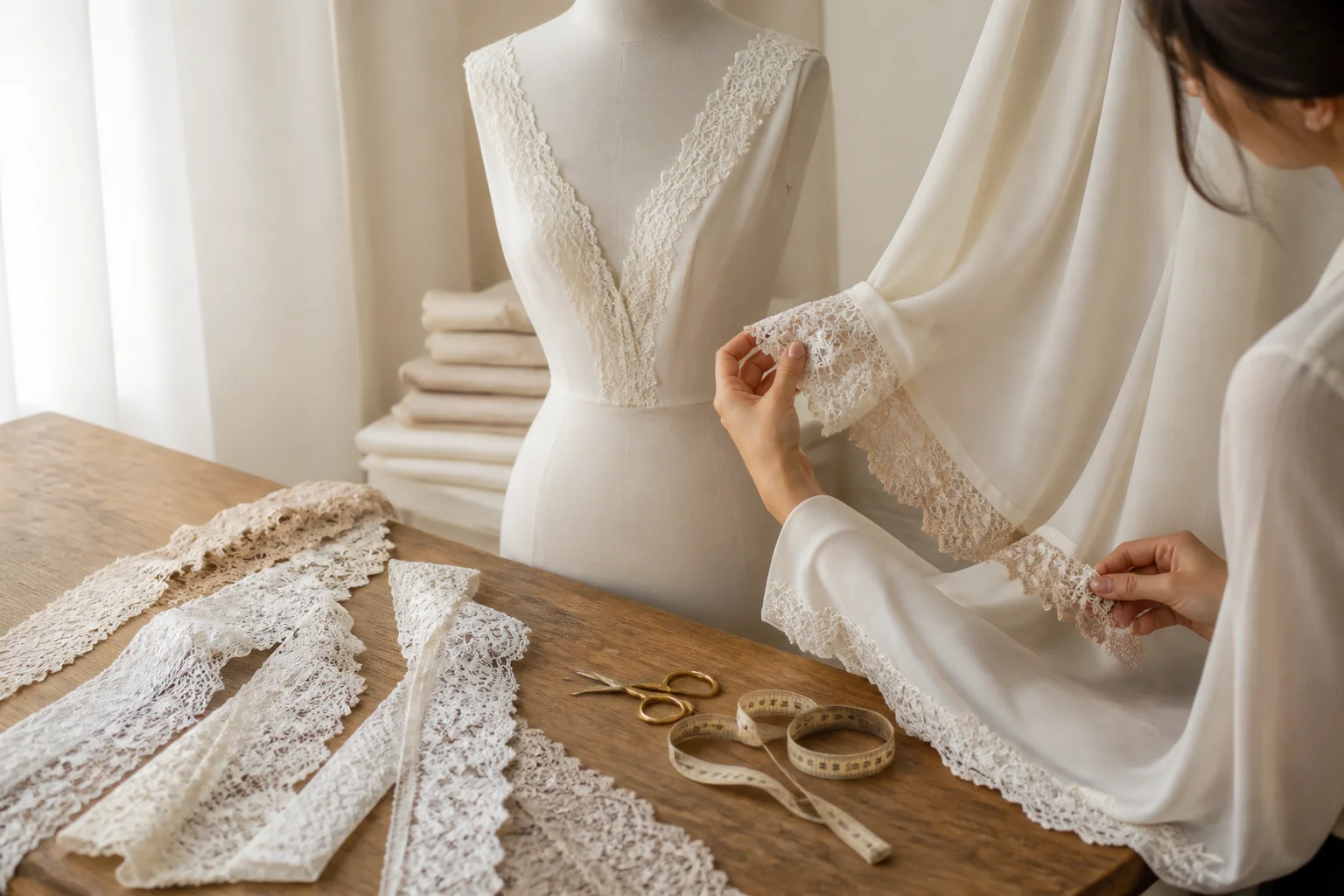
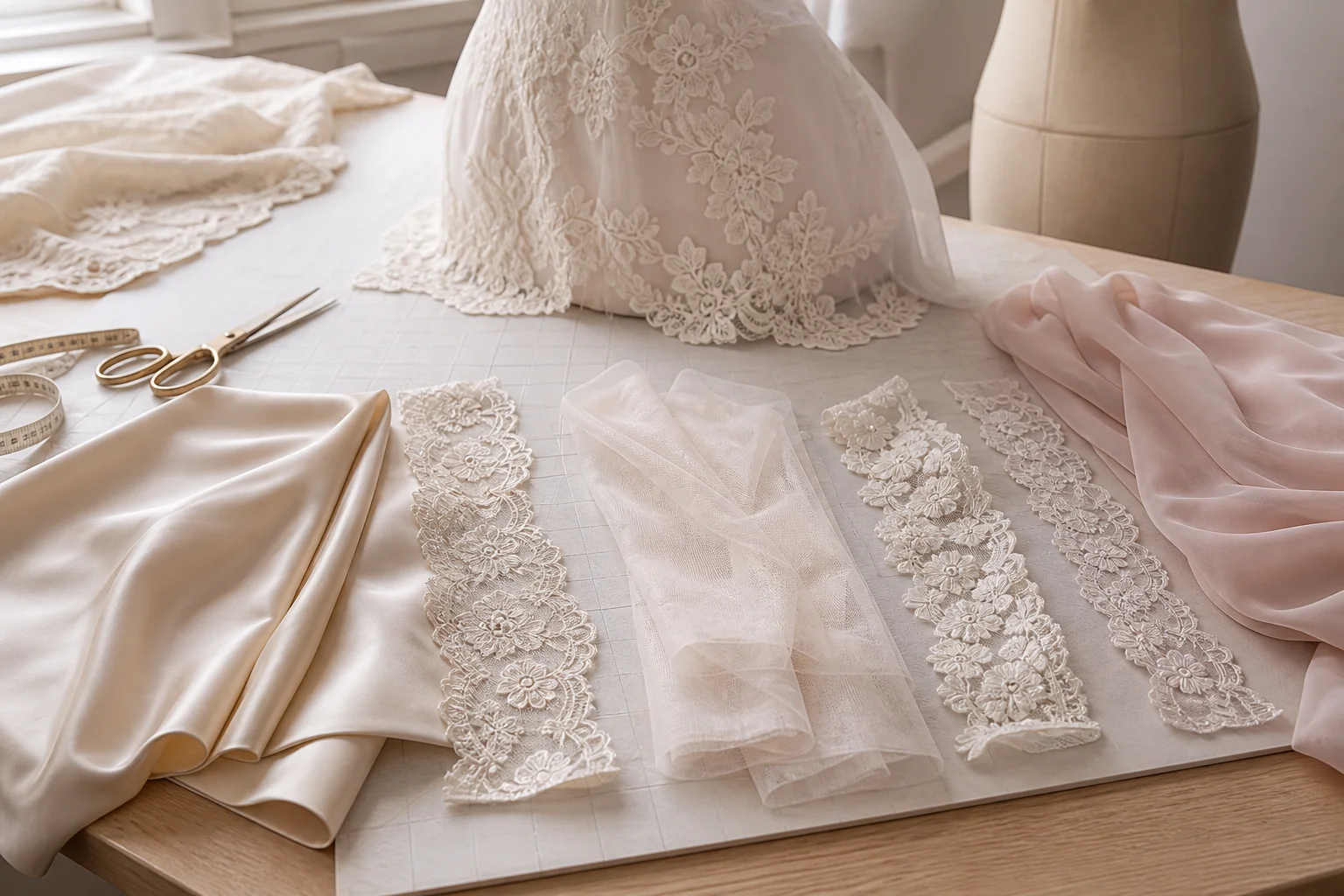
The same lace trim can create completely different results when it is sewn onto satin, tulle, chiffon or a structured garment. A trim that looks crisp and elegant against a smooth surface may feel visually heavy on a very light fabric. A delicate edging that disappears on a formal dress may be exactly right for a sheer sleeve or a soft hem.
That is why lace selection should begin with the fabric, not only with the lace pattern. Consider the base fabric’s texture, drape, surface detail, movement and intended garment purpose. Then choose a lace trim that supports the desired visual effect and the practical sewing application.
1. Start With the Fabric, Not Just the Lace
A useful selection order is fabric, garment purpose, desired effect, then lace trim. First ask what the base fabric is doing in the design. Is it smooth and reflective, sheer and airy, softly draped, elastic, or visually structured? Each answer changes how the lace will be seen and handled.
- Texture: A smooth fabric gives decorative lace a clear contrast, while a textured fabric may call for a simpler or more carefully scaled edge.
- Weight and visual weight: Do not assume physical weight from appearance alone. Compare how prominent the trim looks beside the fabric and whether the edge makes the garment feel balanced.
- Drape: A trim should not visually fight the way the garment falls. A flowing base may need a light-looking border, while a stable shape may support a more defined decoration.
- Stretch: If the fabric moves with the body, check whether the lace must also move or whether it is being used only as a stable decorative detail.
- Surface detail: Dense fabric and dense lace can compete. A clean base may allow the lace pattern to become the focal point.
These are practical guidelines rather than universal rules. The intended neckline, sleeve, hem, seam or accessory application still determines the final choice.
2. Lace Trim With Satin and Other Smooth Fabrics
Satin and other smooth-looking fabrics create a clear surface against which lace texture can be noticed. This can produce an elegant contrast for bridalwear, eveningwear, formal dresses and tailored embellishment, but the balance depends on the design.
A delicate trim may preserve a refined, quiet effect on a simple satin bodice. A more decorative border can create a statement at a sleeve edge, waist seam or hem when the rest of the garment is intentionally clean. Look at the lace from the distance at which the garment will be viewed: a small pattern may read as texture, while a larger pattern may become the main visual feature.
Construction also matters. Smooth fabrics can reveal uneven stitching or a bulky join, so place the trim temporarily and inspect both sides of the edge before sewing. If the trim is intended to sit on top of the satin, consider how the edge will be secured. If it is intended to finish a seam, check whether the lace needs a straight, controlled edge rather than a highly irregular border.
3. Lace Trim With Tulle and Sheer Fabrics
Tulle and other sheer fabrics often create a lightweight visual field. Lace trim can define that field at a veil border, sleeve edge, neckline, overlay or hem, but proportion is important. A decorative border that is too visually dominant may make a soft, transparent garment feel less airy.
For a light result, compare the trim’s openness, motif scale and edge direction with the transparency of the tulle. Use temporary placement to see whether the lace supports the base or blocks too much of the sheer effect. On a veil or overlay, the border may be the main decorative line, while on a sleeve or neckline the trim may need to remain more restrained.
When sewing to sheer fabric, plan the joining area carefully. A visible seam, thread buildup or uneven tension can interrupt the clean appearance of the base. The best trim is not simply the prettiest sample; it is the one whose scale and edge behavior remain convincing after attachment.
4. Lace Trim With Chiffon and Other Lightweight Fabrics
Chiffon and similarly delicate-looking fabrics are valued for movement and drape. Lace edging should support that movement rather than making the garment appear stiff at every edge. A narrow or lightweight-looking trim can maintain a soft transition, while a wider decorative trim may be better reserved for a deliberate statement area.
Consider how the garment moves when worn. At a flowing hem, the trim will influence the way the edge is read in motion. At a neckline, it may frame the body without becoming the main structure. At a sleeve, the relationship between the trim and the fabric’s movement should be tested before production.
Do not use a fixed weight rule for all chiffon projects. Instead, compare the sample visually and physically with the actual fabric. Check whether the edge curls, pulls, collapses or creates an unwanted contrast. A small test can reveal more than a product title or a catalog photograph.
5. Lace Trim With Stretch Fabrics
Stretch matters when the garment edge must expand, recover or move with the body. Fitted fashion, lingerie, dancewear, close sleeves and body-hugging necklines may require different handling from a stable decorative border on a structured garment.
Separate decorative use from movement-critical use. A stable trim may be suitable for a fixed panel or seam accent, while an edge that must expand with the wearer needs a product and sewing method that can accommodate that movement. The requirement depends on the garment and the exact application, not simply on the word ‘lace’ or the visual style of the trim.
Always verify Stretch or Elasticity in the current product record for the exact SKU. Never infer it from a photograph, product category or similar item. If the field is not clearly recorded, treat the property as unconfirmed and use a sample or supplier clarification before making a fit-critical decision.
For example, LaceFabricShop currently lists Lace Trim for Garment Embellishment LT0192 as an active product. Its recorded options include 100 cm options in several widths, including 1.8 cm, 2.5 cm and 3 cm variants. These are recorded options for this product; they do not establish the stretch behavior or universal suitability of every lace trim.
6. Lace Trim With Structured or Heavier Fabrics
Structured dresses, jackets and costume garments can support a clearer decorative border, but the trim still needs to fit the garment’s visual proportion. A wider decorative trim may hold its presence on a stable silhouette, while a small edging may work better as a controlled seam detail.
Think in terms of balance rather than an assumed product weight. If the base garment has strong lines, the lace can either echo that structure or provide a deliberate soft contrast. If both the fabric and trim are highly decorative, reduce competition through placement, spacing or a simpler surrounding area.
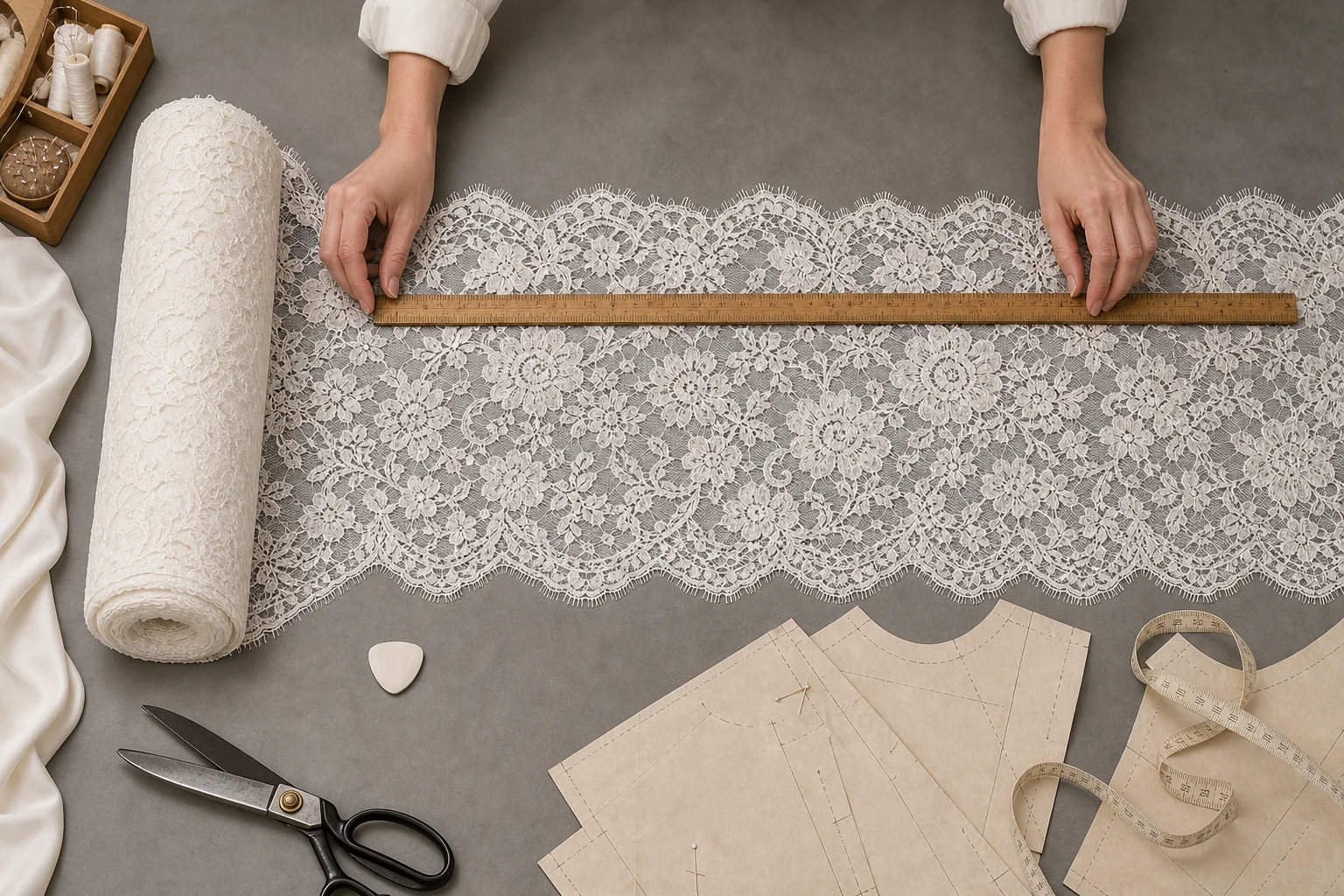
For a visible hem or panel, inspect how the trim joins at corners and seams. A beautiful border can look unfinished if the joining direction is not planned. Make a paper or fabric placement test before cutting valuable material.
7. Match Texture and Pattern Scale
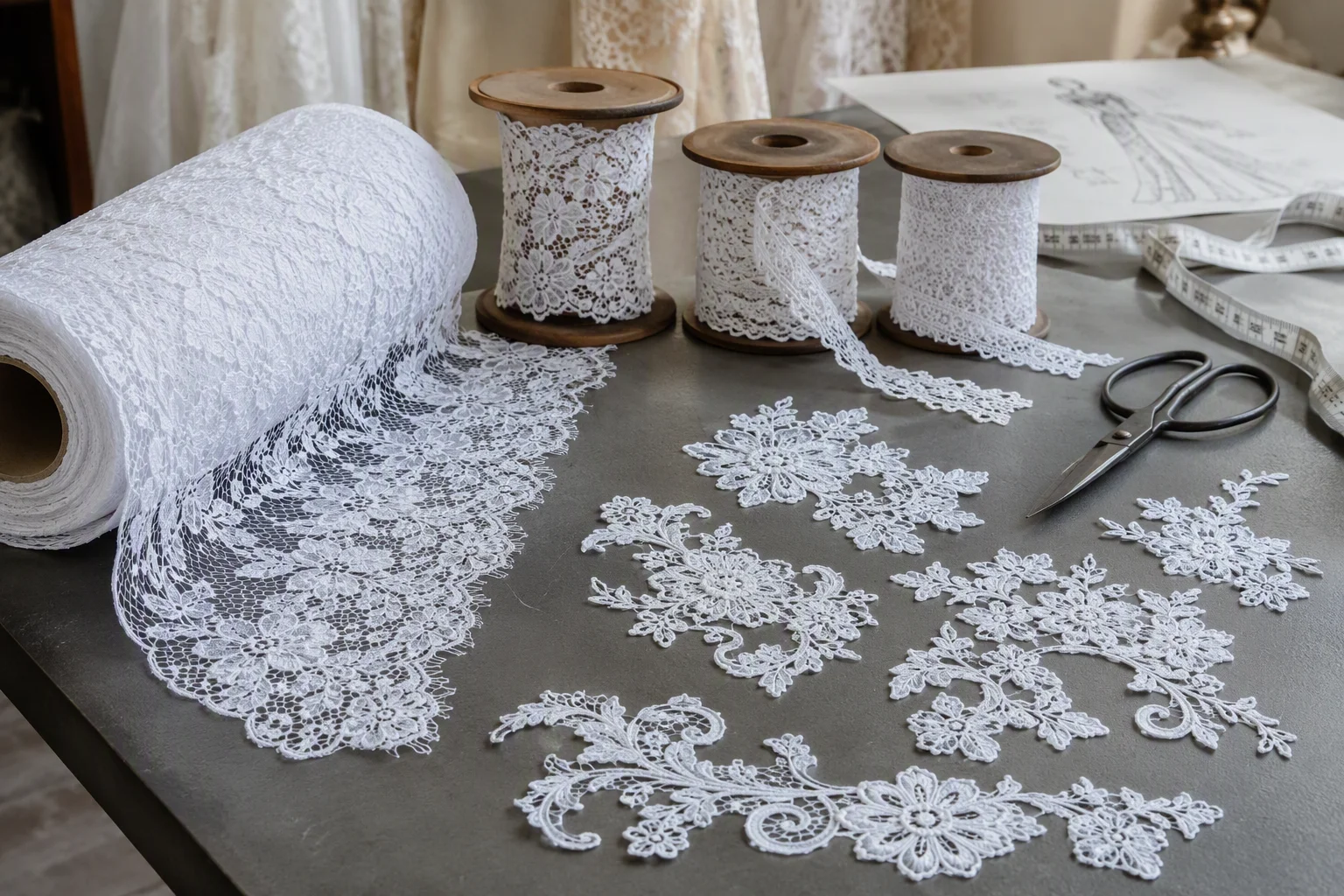
Texture and pattern scale are among the most useful matching tools. Small lace motifs can blend into a delicate base or act as a quiet edge. Larger motifs can become a focal point, particularly against a clean fabric with little surface decoration.
- Delicate fabric with bold lace: Use this contrast intentionally and check whether the trim overwhelms the base.
- Clean fabric with detailed lace: The lace may become the visual feature, so placement should be precise.
- Textured fabric with dense lace: Compare the two surfaces from a distance to avoid visual competition.
- Small pattern with a simple edge: This can support understated dressmaking details without distracting from the garment shape.
Pattern scale is project-dependent. The correct match is the one that gives the garment a clear hierarchy: the eye should know whether to read the fabric, the lace, the silhouette or the edge detail first.
8. Match Lace Trim by Edge and Construction
The edge is not a minor detail. It determines whether the lace looks like a finished border, a soft fringe, a visible decorative line or a concealed construction layer.
An eyelash-style edge can create a soft, irregular outline when the design calls for a delicate finish. A straight edge may be easier to align along a seam or concealed application. A decorative border can become the main feature at a hem or cuff. These are construction considerations, not automatic properties of every product with a similar category name.
Before ordering, decide whether the lace will sit visibly on the garment or be partly concealed. Check the direction of the edge, the joining point and whether the trim needs to follow a curve. Use temporary stitches or pins to evaluate the result before committing to final sewing.
9. A Simple Fabric-to-Lace Matching Checklist
- Is the fabric lightweight, flowing or structured?
- Does the fabric stretch, and does the lace need to move with it?
- Is the surface smooth, sheer or textured?
- Should the lace blend with the fabric or create a deliberate contrast?
- Is the lace width proportional to the garment area?
- Does the pattern scale support the fabric rather than compete with it?
- Does the edge design suit the visible or concealed construction?
- Would a sample reveal a problem before production?
10. When to Order a Lace Trim Sample
A sample is especially useful when working with a new fabric, a fitted garment, a visible neckline, a delicate base, a bridal project or custom production. It is also valuable when matching lace to fabric already in the studio, because screen color and visual scale can differ from the finished combination.
Use the sample to test texture, drape, movement, edge behavior, pattern scale, color and sewing method. Do not assume one quantity is suitable for every product. The useful sample amount depends on the application and the test you need to perform.
Conclusion
Good lace-trim matching is not simply a search for the most beautiful motif. It is a decision about texture, drape, stretch, scale, edge design, sewing application and garment purpose. Start with the fabric, define the edge or seam, decide whether the lace should blend or contrast, and verify any product property that affects fit or construction. A well-matched trim should make the garment feel intentional from the first look through the final stitch.
🌟 Exclusive Designer Access:
Stop wasting time hunting for the perfect lace. Explore our curated 2026 Bridal Trends and experience premium quality starting from just 0.5 meters.
Comment