![[object Object]](https://img-va.myshopline.com/image/store/2000678933/1663746048441/39b6b7c932914f9586953fa6dbb3e95c.png?w=1694&h=200)
The Designer's Guide to Working with Beaded and Sequined Lace: Pro Techniques for Evening Wear
Jul 20,2026 | LaceFabricShop
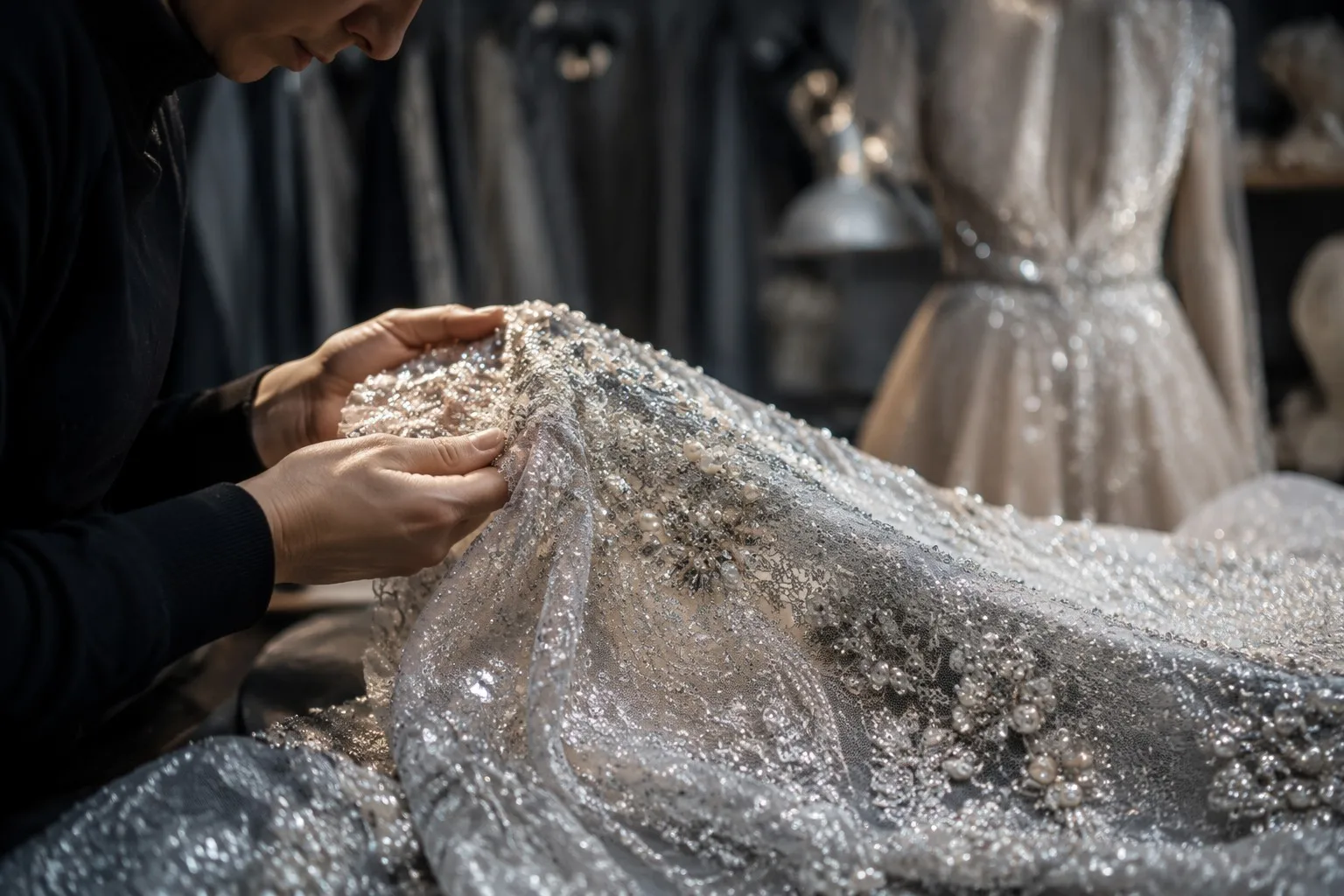
Working with heavy beaded and sequined lace is the ultimate test for any couture atelier. While these fabrics offer unmatched glamour for evening gowns and red-carpet looks, they present unique challenges—from broken needles to bulky seams and lost beads. At LaceFabricShop, our collection of premium beaded trims and tulle is designed for professionals who demand brilliance without compromise. To help you master these intricate materials, we’ve compiled our top professional techniques.
1. Clearing the Seam Allowance (The "De-beading" Secret)
The most critical step in handling beaded lace is clearing the seam allowance. Before sewing, you must carefully remove all beads and sequins within 1/2 inch (1.3cm) of the stitching line. This prevents your sewing machine needle from striking a bead and breaking, ensuring a smooth, uninterrupted seam. Pro Tip: Save the removed beads to fill in any gaps by hand after the seam is finished.
2. Choosing the Heavy-Duty Needle
Even after clearing the seam allowance, you may encounter residual stiff threads or small sequins. Use a size 90/14 or 100/16 Jeans/Denim needle. These needles have a reinforced shaft and a sharp point that can power through multiple layers of heavily embroidered tulle and stabilizer without bending or skipping stitches.
3. The "Couching" Technique for Invisible Joins
Standard machine seams can create visible breaks in the beadwork pattern. For a seamless couture look, overlap the motifs of two pieces and use a technique called "couching." Hand-stitch the motifs from one piece over the second using a fine monofilament thread. This blends the two pieces together so the beadwork appears as one continuous flow.
4. Securing Loose Ends to Prevent Unraveling
Lace beadwork is often interconnected. If you cut one thread, you might lose a whole string of pearls or crystals. As soon as you cut your fabric, use a tiny drop of flexible fabric glue or perform a quick hand-knot on the underside of the fabric at every cut point to lock the beads in place.
5. Stabilizing for Weight Management
Heavily beaded lace is significantly heavier than standard tulle. To prevent the weight of the beads from stretching the bodice or neckline out of shape over time, always use an internal stay or underline your lace with a stable fabric like silk organza. This provides a structural skeleton that carries the weight, preserving the garment’s silhouette.
Comment